SQL · marketplace operations
Coach the sellers driving the larger problem
Would removing the worst sellers meaningfully improve customer reviews?
Why this question matters
Buyers saw one Olist storefront, so late shipping or poor service from individual sellers could harm the whole marketplace. The practical question was where intervention would have the most effect.
How I approached it
I built a seller scorecard in SQL from reviews, shipping deadlines, and cancellations. Reviews on orders with multiple sellers were excluded from seller-level ratings; a minimum of ten orders kept tiny samples from dominating the scorecard.
What the evidence showed
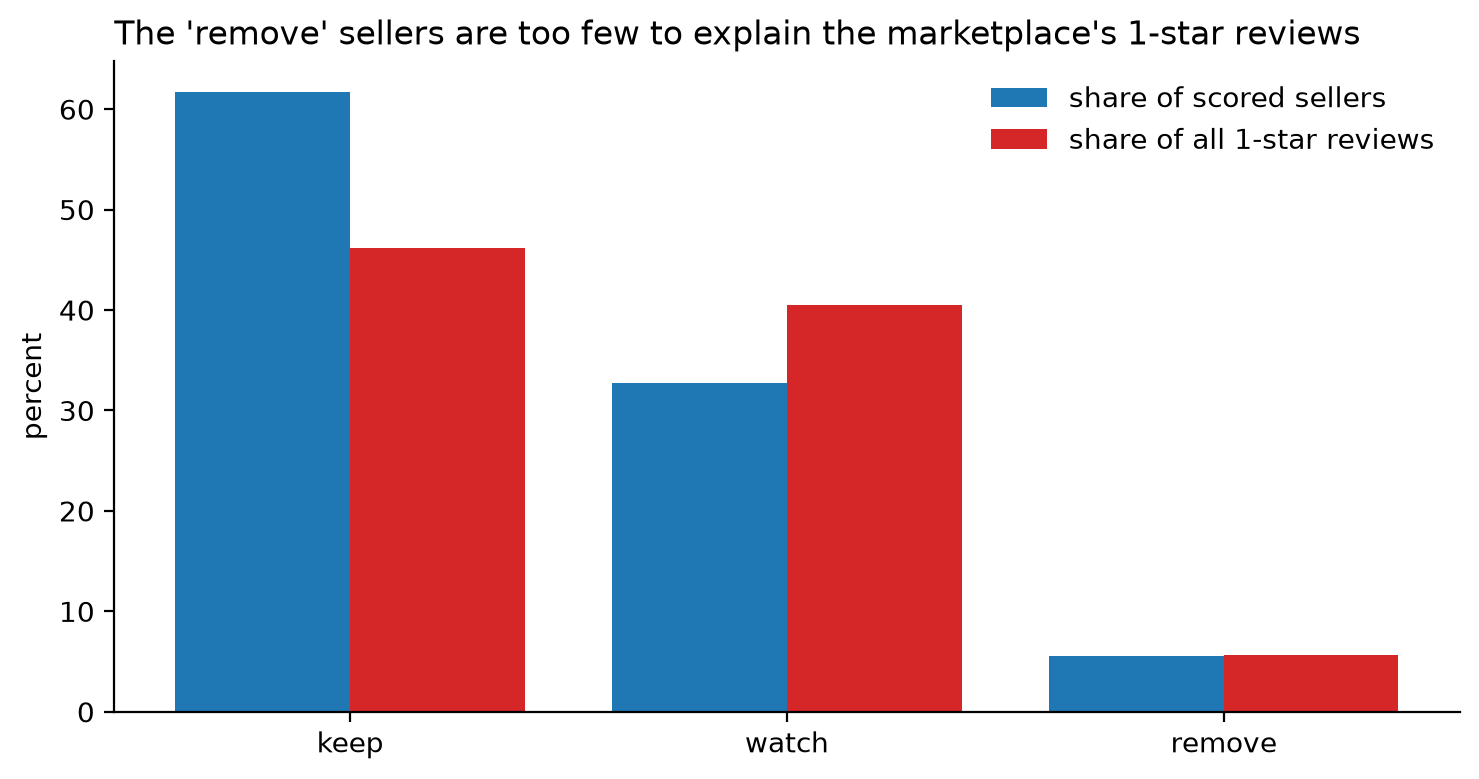
- The proposed remove tier held 5.6% of scored sellers and generated 5.7% of one-star reviews. Removing it alone would barely change the marketplace-wide result.
- The watch tier handled 32.6% of orders and generated 40.5% of one-star reviews.
- Sellers who missed shipping deadlines more often had lower average review scores. New, low-volume sellers also scored below the more established group.
The decision it supports
Flag missed shipping deadlines, coach the watch tier, and use warnings before removing the small worst-performing tail. Improve onboarding for new sellers.
Where the evidence stops
The tiers and thresholds are analytical proposals, not tested interventions. The dataset has no fee or margin data to assess the economics of incentives.